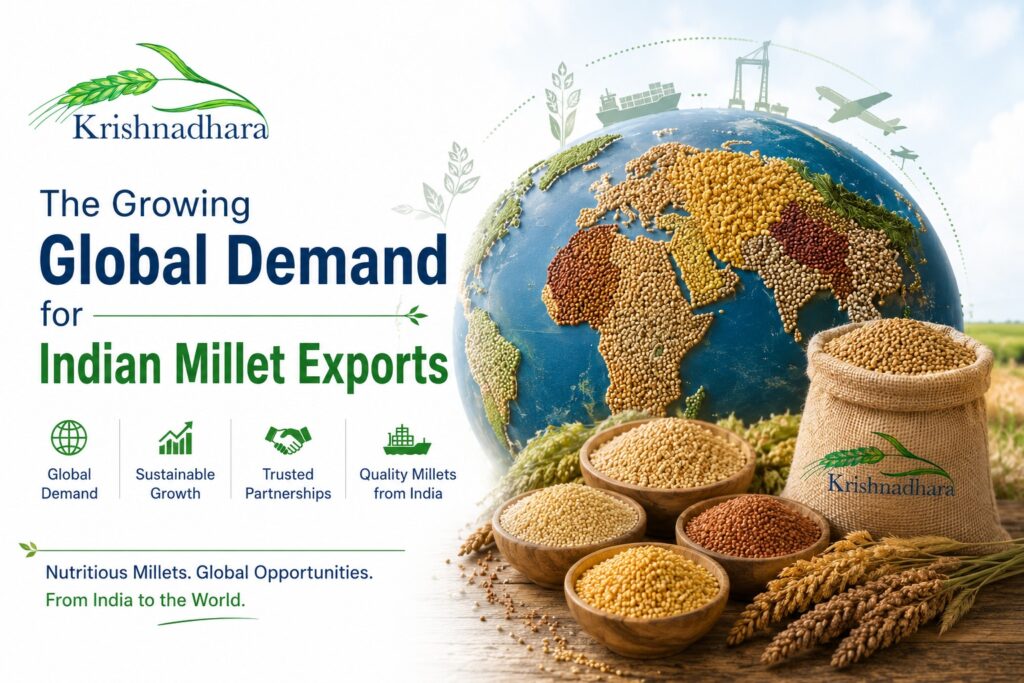
Africa’s food market is changing. Buyers are looking beyond traditional grains and focusing more on nutrition, affordability, shelf life, and reliable supply chains. That shift has created strong demand for Indian millet exports across countries like Nigeria, Kenya, South Africa, Tanzania, and Ghana.
What this really means is simple. Importers are not just buying grains anymore. They are looking for long-term supply partners who understand quality, consistency, and international trade standards.
India has become one of the strongest global suppliers of millets because of its farming scale, climate diversity, and export infrastructure. For African distributors, wholesalers, food processors, and retailers, Indian millets offer a practical solution for growing consumer demand.
At Krishnadhara Enterprise, the focus is on supplying export-quality Indian millets with reliable logistics and consistent quality for international buyers.
Why Indian Millets Are Gaining Popularity in Africa
Millets have always been part of traditional diets in many African countries. But now demand is increasing for a different reason.
Consumers are becoming more health conscious. Governments are promoting climate-resilient crops. Food brands are introducing healthier grain products. Retailers are expanding organic and nutrition-focused categories.
Indian millets fit perfectly into this shift.
Here’s why African buyers are increasing millet imports from India:
High Nutritional Value
Millets are rich in fiber, iron, calcium, protein, and essential minerals. Many buyers now position millet-based products as healthy alternatives to refined grains.
Popular uses include:
- Millet flour
- Breakfast cereals
- Baby food
- Bakery products
- Animal feed
- Traditional African meals
- Health food products
Climate-Resilient Grain
Millets require less water compared to many other crops. This makes them attractive in regions dealing with water shortages and climate uncertainty.
African agricultural sectors are increasingly supporting millet consumption because it supports food security goals.
Long Shelf Life
Importers prefer grains with good storage stability. Indian millets maintain quality over long shipping periods when properly processed and packed.
This reduces spoilage risks during international transportation and warehousing.
India’s Position in the Global Millet Export Market
India is one of the world’s largest millet producers. The country exports several millet varieties to global markets including Africa, the Middle East, Europe, and Asia.
The Indian government has also increased focus on millet exports after the International Year of Millets gained worldwide attention.
This has improved:
- Millet processing infrastructure
- Export quality standards
- Global awareness
- International demand
- Supply chain investments
For African buyers, this creates access to large-scale and dependable sourcing opportunities.
Popular Indian Millet Varieties Exported to Africa
Different markets demand different millet varieties. Let’s break down the most commonly exported Indian millets.
Pearl Millet
Pearl millet is one of the most exported varieties from India. It is widely used for food processing, flour production, and animal feed.
Key benefits:
- High energy content
- Good drought resistance
- Affordable bulk pricing
Finger Millet
Finger millet is known for its calcium and iron content. Health-focused brands and food manufacturers often prefer this variety.
Popular applications:
- Millet flour
- Nutrition products
- Infant food
- Traditional recipes
Sorghum
Sorghum is widely used for food and feed industries across Africa.
Advantages include:
- Gluten-free properties
- High adaptability
- Industrial food usage
Foxtail Millet
Foxtail millet is increasingly used in premium health food markets due to its nutritional profile and digestibility.
What African Buyers Look for in an Indian Millet Exporter
Price matters. But serious buyers usually care more about consistency, export reliability, and communication. Here’s what importers typically evaluate before selecting an Indian millet supplier.
Consistent Quality Standards
Export-grade millets must meet international quality requirements related to:
- Moisture levels
- Cleanliness
- Grain uniformity
- Packaging quality
- Pest control
Reliable exporters maintain strict quality checks before shipment.
Bulk Supply Capacity
Large distributors and wholesalers need uninterrupted supply. A strong exporter should handle container-scale shipments without delays.
Documentation and Export Compliance
International trade requires proper export documentation including:
- Phytosanitary certificates
- Certificate of origin
- Commercial invoices
- Packing lists
- Shipping documents
Experienced exporters simplify this process for overseas buyers.
Packaging Solutions
Different buyers need different packaging formats.
Common export packaging includes:
- 25 kg bags
- 50 kg PP bags
- Customized private label packaging
- Jumbo bulk bags
Why African Importers Choose Indian Millet Suppliers
Let’s break it down clearly.
African buyers often choose Indian exporters because India offers a balance of:
- Competitive pricing
- Large production capacity
- Multiple millet varieties
- Strong export infrastructure
- Flexible shipping options
India’s agricultural export network also supports faster global logistics compared to many smaller producing regions.
For businesses importing grains at scale, reliability matters more than short-term pricing advantages.
Challenges Buyers Face While Importing Millets
Not every exporter delivers the same experience. Many buyers struggle with:
- Inconsistent grain quality
- Shipment delays
- Poor communication
- Incorrect export documents
- Moisture and storage issues
- Unstable pricing
What this really means is that choosing the right export partner becomes critical.
An experienced exporter reduces operational risks and improves long-term business stability.
How Krishnadhara Enterprise Supports Global Millet Buyers
Krishnadhara Enterprise works with international buyers looking for reliable Indian agricultural exports.
The focus is straightforward:
- Export-quality millets
- Consistent supply
- Transparent communication
- Bulk shipment capability
- International export support
Whether the requirement is for wholesalers, distributors, food manufacturers, or retail supply chains, the goal is to deliver dependable export solutions for African markets.
The Future of Millet Exports from India to Africa
The global millet industry is still growing.
Demand is expected to increase because of:
- Rising health awareness
- Demand for affordable nutrition
- Climate-resilient agriculture
- Expansion of health food industries
- Government food security initiatives
Africa remains one of the strongest growth regions for millet imports.
For importers, retailers, and food brands, this creates a strong opportunity to build long-term supply partnerships with trusted Indian exporters.
Final Thoughts
The demand for Indian millet exports is not a temporary trend. It reflects a larger shift in global food consumption.
African markets are looking for grains that are nutritious, affordable, adaptable, and commercially practical. Indian millets meet those expectations.
The key is finding an exporter who can consistently deliver quality products, reliable shipping, and professional support.
That’s where experienced suppliers like Krishnadhara Enterprise help businesses build stable import operations with confidence.
Frequently Asked Questions About Indian Millet Exports
Which millets are commonly exported from India to Africa?
India commonly exports pearl millet, finger millet, sorghum, and foxtail millet to African markets
Why are Indian millets popular in African countries?
Indian millets are valued for their nutritional benefits, competitive pricing, long shelf life, and consistent export supply.
Can Indian millet exporters provide bulk shipments?
Yes. Established exporters handle bulk container shipments for wholesalers, distributors, and food manufacturers.
What packaging options are available for millet exports?
Most exporters provide 25 kg bags, 50 kg bags, jumbo bags, and customized packaging based on buyer requirements.
How do I choose a reliable millet exporter from India?
Look for exporters with:
- Export experience
- Quality certifications
- Strong communication
- Consistent supply capability
- Proper export documentation support