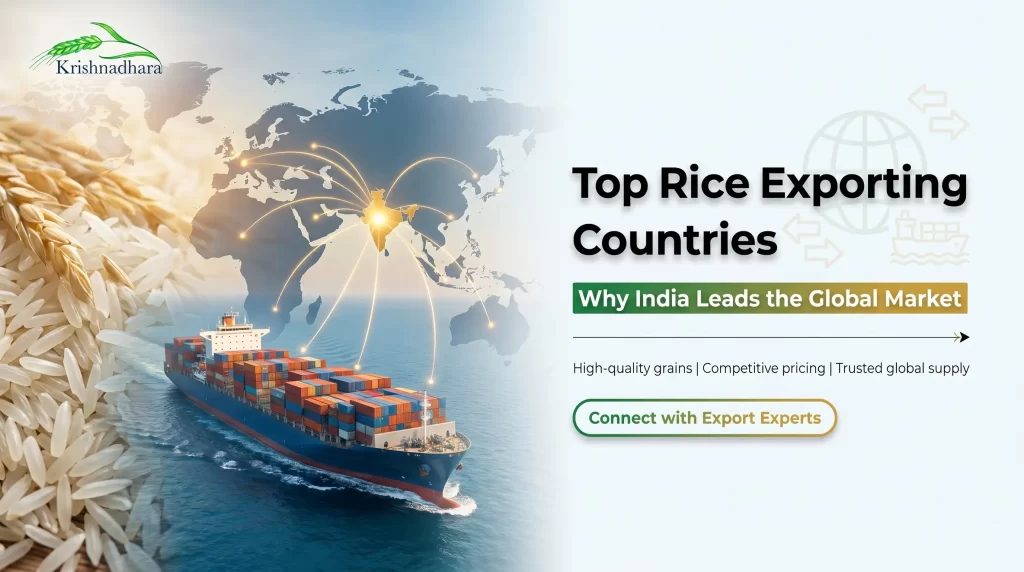
Introduction: Understanding the Global Rice Trade
Rice is not just another commodity. It feeds more than half the world, and for many African countries, it is a daily necessity. That alone makes the global rice trade one of the most important food supply chains.
Here’s the thing. If you are an importer in Africa, your success depends heavily on where you source your rice. Not all exporting countries offer the same quality, price stability, or supply reliability. Some focus on premium rice. Others focus on bulk. Some struggle with consistency. What this really means is you need to understand the landscape before choosing a supplier. This guide breaks down the top rice exporting countries and explains clearly why India leads the global market.
What Defines a Top Rice Exporting Country
A country does not become a leading rice exporter by accident. There are clear factors behind it.
Production capacity is the first one. A country must produce enough rice not just for its own population but also for export. Without surplus, export is not sustainable.
Then comes infrastructure. Ports, storage facilities, and shipping networks all matter. If logistics are weak, supply becomes unreliable.
Quality is another factor. Importers need consistency. Buyers in Nigeria or Ghana expect the same quality in every shipment. If that does not happen, trust is lost quickly. Government policy also plays a role. Export-friendly policies, stable pricing, and trade agreements all support long-term growth.
Overview of the Global Rice Export Market
The global rice market is large, but it is also highly competitive. A few countries dominate exports, while many others depend on imports.
Asia leads production and export. Africa leads import demand. This creates a strong trade flow between the two regions.
Countries like Nigeria, Ghana, Kenya, and South Africa rely heavily on rice imports to meet local demand. That is why choosing the right exporting country is critical for importers.
Top Rice Exporting Countries in the World
India stands at the top. It exports more rice than any other country. It offers both basmati and non basmati varieties, covering premium and mass markets.
Thailand is known for quality. It has built a reputation over time, especially for premium rice. But its pricing is often higher compared to India.
Vietnam is fast and competitive. It focuses on bulk supply and quick turnaround. It works well for importers who prioritize speed and volume.
Pakistan is strong in basmati rice. It competes in the premium segment but does not match India in total volume.
The United States supplies high-quality rice but at a higher cost. It serves niche markets rather than large-scale import demand. Myanmar and Cambodia are growing exporters. They are still building their presence and consistency in global trade.
India’s Rise as the Leading Rice Exporter
India did not reach the top overnight. Its rise is built on scale, diversity, and consistency.
Over the years, India has expanded its reach into Africa, the Middle East, and Europe. It has built strong relationships with importers and distributors.
What stands out is its ability to serve different markets at the same time. It can supply premium basmati rice to high-end buyers while also delivering bulk non basmati rice to mass markets.
This flexibility is what makes India a preferred partner in global rice trade.
What Makes India the Global Leader
Let’s break it down clearly.
India produces a massive quantity of rice every year. This ensures steady supply.
It offers a wide range of varieties. From long grain basmati to affordable non basmati, importers can choose based on their market needs.
Pricing is competitive. This is a major reason why African importers prefer Indian rice exporters. It allows them to maintain margins while staying competitive locally.
The supply chain is well established. From farming to processing to shipping, the system is structured and reliable.
Exporters like Krishnadhara rice exporter add another layer of trust by focusing on consistent quality and long-term partnerships.
Basmati and Non Basmati Advantage
India has a unique advantage. It does not rely on one type of rice.
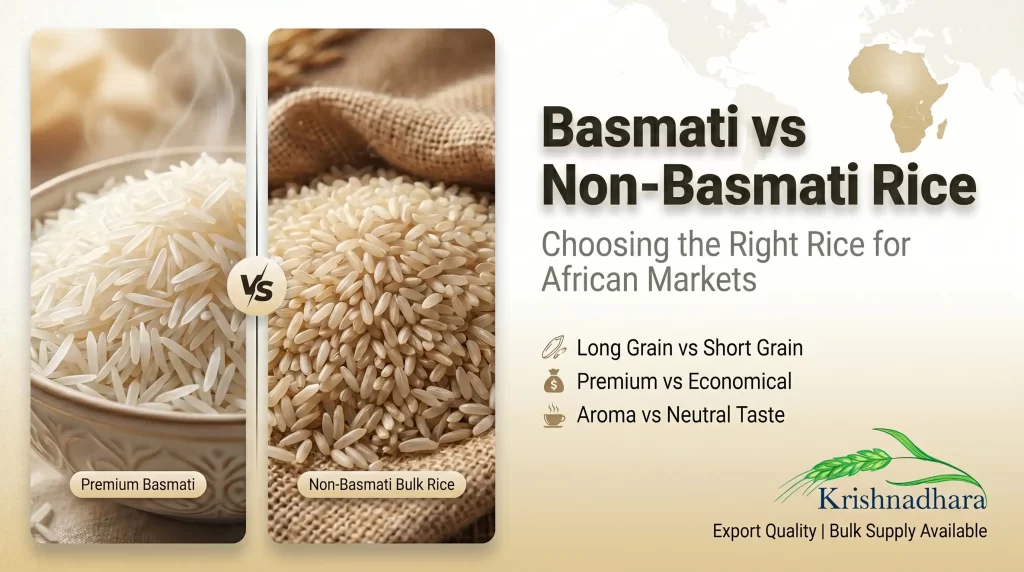
Basmati rice is known globally for its aroma and long grains. It serves premium markets.
Non basmati rice supports bulk demand. It is affordable and widely consumed. What this really means is India can serve every segment of the market. This is something most other exporting countries cannot match at the same scale.
Price Advantage for Importers
Price matters. Every importer knows this.
Indian rice is often more cost effective compared to rice from Thailand or the United States. This gives importers flexibility in pricing their products locally.
Lower cost does not mean lower quality. It simply reflects efficiency in production and supply chain.
For African importers, this balance between price and quality is critical. It allows them to compete in both wholesale and retail markets.
Quality and Consistency
Quality is not just about one good shipment. It is about delivering the same standard every time.
Indian exporters invest in processing, grading, and packaging. This ensures that the rice meets international standards.
Importers working with reliable suppliers like Krishnadhara basmati rice benefit from consistent quality. That consistency builds trust with buyers.
Logistics and Export Strength
India has strong export infrastructure. Major ports handle large volumes of rice shipments efficiently.
Shipping routes to Africa are well established. This reduces delays and improves delivery timelines. Packaging options are also flexible. Importers can choose branding, bag size, and labeling based on their market needs.
Demand in African Markets
Africa continues to be one of the largest import markets for rice.
Population growth and urbanization are increasing demand. Local production is not enough to meet consumption needs.
Indian rice has built a strong presence in countries like Nigeria, Ghana, Kenya, and South Africa. Non basmati dominates in volume, while basmati is slowly gaining attention in urban markets.
Comparing India with Other Exporters
India vs Thailand comes down to price and volume. Thailand offers premium quality, but India offers better pricing and variety.
India vs Vietnam is about flexibility. Vietnam focuses on bulk and speed, while India covers both premium and bulk segments.
India vs Pakistan highlights scale. Pakistan is strong in basmati, but India leads in total export volume and diversity.
India vs the United States shows cost difference. US rice is high quality but more expensive, limiting its reach in price-sensitive markets.
Challenges in Global Rice Trade
No market is without challenges.
Weather conditions can affect production. Floods or droughts impact supply.
Government policies can change export rules. This affects pricing and availability.
Currency fluctuations also play a role in global trade.
Importers need to stay aware of these factors when planning long-term sourcing.
Opportunities for Importers
Despite challenges, opportunities are growing.
Demand for rice is increasing across Africa. This creates consistent business potential.
Premium rice demand is also rising in urban areas. This opens new segments for importers. Working with reliable Indian rice exporters allows importers to scale their business with confidence.
Why Importers Choose Indian Exporters
Importers look for reliability. They need suppliers who deliver on time and maintain quality.
Indian exporters offer variety, consistency, and competitive pricing.
Companies like Krishnadhara focus on building long-term relationships rather than just completing transactions. That approach matters in a business where trust is everything.
How to Choose the Right Export Partner
Start with quality checks. Always request samples before placing bulk orders.
Look at consistency. One good shipment is not enough.
Communication is key. A good exporter understands your market and responds quickly.
Choosing the right partner reduces risk and improves long-term stability.
Conclusion: Why India Continues to Lead
Let’s keep it simple.
India leads the global rice market because it offers scale, variety, and reliability. It serves both premium and mass markets without compromise.
For African importers, this means access to consistent supply at competitive pricing.
If you are looking to build a strong rice import business, working with an experienced Indian rice exporter like Krishnadhara gives you a clear advantage.
FAQ Section
Which country is the largest rice exporter in the world
India is currently the largest rice exporter, supplying both basmati and non basmati rice globally
Why do African importers prefer Indian rice
Because it offers competitive pricing, consistent quality, and a wide range of rice varieties
What are the top rice exporting countries
India, Thailand, Vietnam, Pakistan, and the United States are among the leading exporters
Is India a reliable rice supplier for Africa
Yes, India has a strong supply chain and long-standing trade relationships with African countries
What should importers look for in a rice exporter
Consistency, quality, pricing, and reliable delivery are the key factors