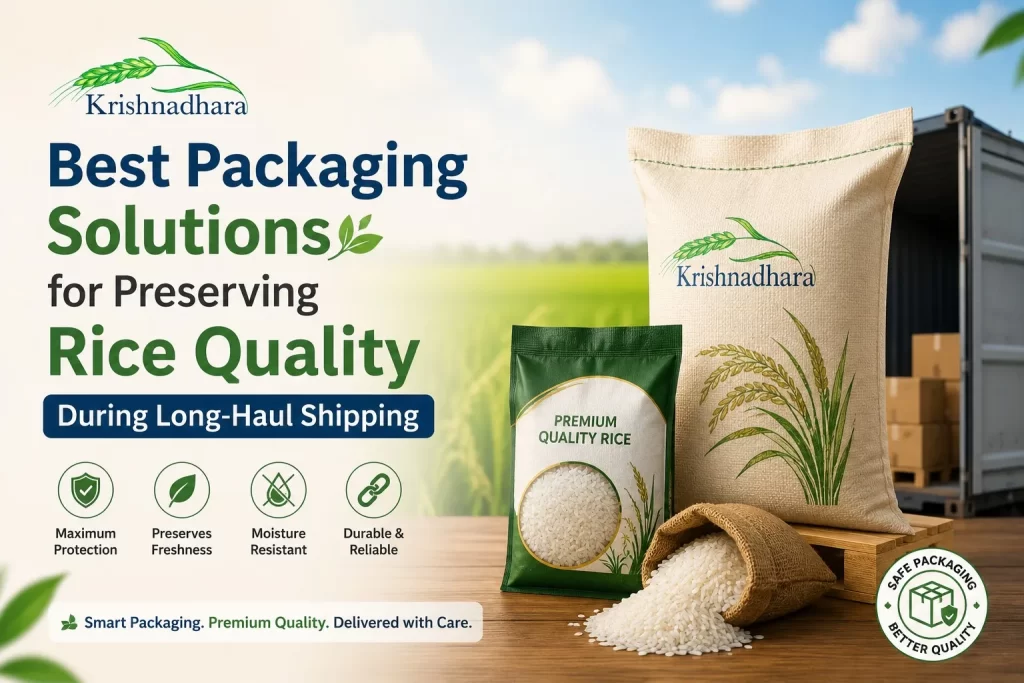
Rice export is a business built on consistency. Buyers expect every shipment to arrive in the same condition it left the processing facility. That sounds simple until you consider what rice goes through during international shipping.
A container traveling from India to Africa may spend weeks at sea. During that time, rice is exposed to humidity, fluctuating temperatures, container condensation, rough cargo handling, and long storage periods at ports. If the packaging is weak, the rice absorbs moisture, loses aroma, breaks during handling, or develops quality issues before it even reaches distributors.
Here’s the thing. Even premium rice can lose market value if the packaging fails.
For importers across Nigeria, Ghana, Kenya, South Africa, Tanzania, and other African markets, packaging quality has become just as important as grain quality. Buyers are not only looking for an Indian rice exporter with competitive pricing. They want a supplier who understands how to preserve rice quality during long-haul shipping.
At Krishnadhara Enterprise, packaging is treated as a critical part of export quality control. The objective is simple: ensure the rice arrives fresh, aromatic, visually appealing, and ready for distribution.
Why Packaging Matters in International Rice Export
Rice may look durable, but it is highly sensitive to environmental conditions. During sea freight, the product can remain inside shipping containers for several weeks. In tropical shipping routes, especially those connecting India and Africa, moisture becomes one of the biggest threats.
When warm air inside containers cools down overnight, condensation forms. This process is often called container rain. Water droplets can collect inside the container and eventually affect the rice bags. Poor packaging allows moisture to penetrate the product, leading to spoilage, odor, discoloration, and fungal growth.
What this really means is simple. A shipment that leaves India in premium condition can arrive damaged if the packaging is not designed for export conditions.
Strong rice packaging creates a protective barrier between the product and the external environment. It helps preserve freshness, maintain texture, reduce breakage, and extend shelf life. This becomes especially important for importers who store inventory for extended periods before distribution.
For African wholesalers and retailers, reliable packaging also reduces financial losses caused by torn bags, leakage, or contamination during inland transportation.
The Biggest Challenges During Long-Haul Rice Shipping
Understanding export risks helps buyers choose the right rice supplier. Let’s break down the most common challenges rice exporters face during international shipping.
Moisture Exposure During Sea Freight
Moisture is one of the most damaging elements in rice transportation. Rice naturally absorbs humidity from the environment. Once moisture enters the packaging, grain quality begins to decline.
High moisture levels can cause:
- Mold development
- Unpleasant odor
- Discoloration
- Reduced shelf life
- Clumping of grains
This is why experienced rice exporters use moisture-resistant packaging materials and proper container loading methods.
Grain Breakage During Handling
Rice shipments are loaded, stacked, unloaded, transferred, and transported multiple times before reaching final destinations. Weak packaging materials often tear under pressure or collapse during stacking.
Broken grains reduce the commercial value of rice. For wholesalers and supermarket distributors, this affects customer perception and resale potential. Durable export packaging helps maintain grain integrity even during rough handling conditions at ports and warehouses.
Loss of Aroma in Premium Basmati Rice
Basmati rice is valued for its fragrance as much as its appearance and cooking quality. Improper sealing allows aroma to escape during transit and storage.
For premium rice buyers in African markets, aroma loss directly impacts product value. This is why high-quality Basmati rice exporters often use vacuum packaging or multi-layer laminated bags.
Pest and Contamination Risks
Long storage periods increase exposure to contamination risks. If packaging is poorly sealed, insects and external contaminants can enter the bags during transit or warehousing. Export-grade rice packaging helps maintain hygiene standards throughout the supply chain.
Best Packaging Materials Used for Rice Export
Different rice varieties and export markets require different packaging approaches. Professional Indian rice exporters select packaging materials based on shipping distance, climate conditions, storage duration, and buyer preferences.
PP Woven Bags for Bulk Rice Export
Polypropylene woven bags remain one of the most widely used packaging solutions in the rice export industry. These bags are durable, lightweight, and suitable for bulk transportation.
African importers commonly prefer PP woven bags because they handle long-distance transportation effectively while remaining cost-efficient.
These bags are widely used for:
- Non-Basmati rice export
- Wholesale rice distribution
- Bulk trade shipments
- 25kg and 50kg packaging formats
One major advantage of PP woven bags is their strength. They can withstand heavy stacking inside containers without tearing easily. This reduces product loss during cargo handling.
Many exporters also add inner liners inside PP woven bags for additional moisture protection.
BOPP Laminated Bags for Retail Rice Packaging
BOPP laminated bags combine functionality with strong visual presentation. These bags are commonly used for retail-ready rice products sold in supermarkets and branded distribution channels.
The laminated outer surface allows high-quality printing, which helps importers build private-label rice brands in African markets.
BOPP bags provide:
- Better resistance against moisture
- Improved shelf appearance
- Stronger sealing quality
- Higher durability during transportation
- Better product presentation for retail shelves
For businesses focused on premium market positioning, BOPP packaging creates a more professional appearance while protecting the rice inside.
Vacuum Packaging for Premium Basmati Rice
Vacuum packaging is commonly used for premium and aromatic rice varieties. In this process, air is removed from the package before sealing.
Removing oxygen helps preserve aroma, freshness, and grain quality during long shipping periods.
This packaging method is especially valuable for:
- Premium Basmati rice export
- Retail packaging
- High-value international markets
- Long storage cycles
Vacuum packaging also reduces oxidation, which helps maintain the natural characteristics of aged Basmati rice.
For African importers serving premium consumers, vacuum-packed rice offers better shelf appeal and product consistency.
Multi-Layer Barrier Packaging
Some export destinations experience extremely humid climates. In these situations, exporters may use multi-layer moisture barrier packaging.
This system combines different protective layers to create stronger resistance against humidity and environmental exposure.
Benefits include:
- Extended shelf life
- Reduced moisture absorption
- Better protection during sea transit
- Improved storage performance in tropical climates
For importers storing rice in coastal regions, this type of packaging provides additional security against spoilage.
Importance of Proper Container Loading
Packaging alone is not enough. Even high-quality bags can fail if containers are loaded incorrectly.
Professional rice exporters follow strict loading procedures to reduce transit risks.
These include:
- Using dry and clean containers
- Installing moisture absorbers inside containers
- Avoiding overstacking
- Maintaining proper airflow
- Securing cargo movement during transit
Here’s why this matters. Poor container conditions can damage rice even when the packaging itself is strong. An experienced Indian rice exporter understands that packaging and logistics work together.
Packaging Sizes Preferred in African Markets
Rice demand varies across African countries and distribution channels. Some buyers focus on bulk wholesale distribution, while others target supermarkets and retail chains.
The most common packaging sizes include:
| Packaging Size | Market Use |
| 1kg | Retail stores |
| 5kg | Household consumption |
| 10kg | Mid-sized retail demand |
| 25kg | Wholesale and distribution |
| 50kg | Bulk commercial trade |
Many African importers request customized packaging based on local market trends and consumer purchasing behavior.
Private-label packaging is also becoming increasingly popular among distributors building regional rice brands.
Why Packaging Directly Affects Profitability
Packaging is often viewed as a transportation requirement, but it has a direct impact on profitability.
Damaged shipments create multiple costs:
- Product loss
- Customer complaints
- Reduced resale value
- Retail rejection
- Brand reputation damage
Good packaging protects both the rice and the buyer’s business. For wholesalers and importers, receiving rice in consistent condition helps maintain customer trust and improves long-term sales performance.
What African Buyers Should Look for in a Rice Exporter
Not all rice exporters follow the same packaging standards. Buyers should evaluate suppliers based on their export handling processes, not only pricing.
Important questions include:
- Are export-grade packaging materials used?
- Is moisture protection included?
- Are bags tested for durability?
- Can the exporter provide private-label packaging?
- Does the supplier understand African market requirements?
- Are proper quality checks conducted before shipping?
Reliable exporters provide transparency in both product quality and packaging standards.
At Krishnadhara Enterprise, every shipment is prepared with export-focused packaging systems designed for international transportation and long storage cycles.
Why India Remains a Leading Rice Exporter to Africa
India continues to be one of the largest rice suppliers for African markets because of its production capacity, rice variety range, and export infrastructure.
African buyers source Indian rice because of:
- Consistent grain quality
- Competitive pricing
- Availability of Basmati and Non-Basmati varieties
- Flexible packaging options
- Bulk export capabilities
Indian exporters also understand the logistical demands involved in shipping rice across long international routes.
This experience plays a major role in maintaining quality from origin to destination.
Final Thoughts
Rice quality does not depend only on cultivation or milling. Packaging plays a major role in protecting the product during international transportation.
Strong export packaging preserves freshness, aroma, texture, and commercial value throughout the supply chain.
For African importers, choosing a rice supplier with reliable packaging systems reduces risk and improves business consistency.
Whether the requirement is bulk Non-Basmati rice or premium Basmati rice, proper packaging helps ensure the product arrives ready for distribution and consumption.
If you are looking for a trusted Indian rice exporter with export-ready packaging solutions for African markets, Krishnadhara Enterprise focuses on delivering rice with quality-controlled packaging built for long-haul shipping.
Frequently Asked Questions
What is the best packaging for rice export?
PP woven bags, BOPP laminated bags, and vacuum packaging are among the most reliable packaging solutions for international rice export.
How do rice exporters protect rice from moisture?
Exporters use moisture-resistant packaging, container moisture absorbers, sealed liners, and proper container loading techniques.
Why is vacuum packaging important for Basmati rice?
Vacuum packaging helps preserve the natural aroma and freshness of Basmati rice during long shipping periods.
Which packaging size is most popular in Africa?
25kg and 50kg rice bags are widely used in wholesale trade, while smaller packs are growing in retail markets.
Why should African buyers choose Indian rice exporters?
Indian rice exporters offer large production capacity, multiple rice varieties, export expertise, and customized packaging solutions for international markets.