Introduction: Why This Choice Matters for Importers
If you are importing rice into Africa, this is not a small decision. It directly affects your margins, your sales speed, and how your buyers see your brand. Many importers think the choice is simple. Cheap rice sells fast, premium rice sells slow. But that is only half true.
Here’s the thing. African markets are not one single market. Nigeria behaves differently than Kenya. Ghana is not the same as South Africa. What works in bulk distribution may not work in retail. So when you are choosing between basmati and non basmati rice, you are really choosing your business strategy.
What this really means is you need clarity before placing orders with any Indian rice exporter. You need to know who your customer is, what they cook, and what they are willing to pay for.
This guide will walk you through that in a practical way, so you can make decisions that actually work in your market.
What is Basmati Rice
Basmati rice comes from India and has built its reputation over decades. It is not just another rice variety. It is known for its long grain, its aroma, and the way it cooks. When you open a bag of good basmati, you notice it immediately. That fragrance is what sets it apart.
When cooked, basmati rice elongates. It does not become sticky or clumped. Each grain stays separate, which gives it a premium feel on the plate. This is one of the main reasons why hotels, restaurants, and higher income households prefer it.
From a business point of view, basmati rice export to Africa is not about volume. It is about value. Importers who deal in basmati are usually targeting customers who are willing to pay more for quality. These are urban buyers, hospitality businesses, and retailers who want to offer something better than standard rice.
Suppliers like Krishnadhara basmati rice focus on maintaining that consistency. Because in premium rice, one bad shipment can damage your reputation quickly.
What is Non Basmati Rice
Non basmati rice is a broader category. It includes many varieties that are widely used across African countries. This is the rice that moves in bulk. This is what most households consume daily.
It does not have the strong aroma of basmati, and the grains are usually shorter or medium in size. But that is not a disadvantage in these markets. In fact, it is exactly what makes it practical. It cooks easily, fills the plate, and matches local food habits.
Here’s what matters. Price and availability. Non basmati rice suppliers from India dominate African imports because they can supply large quantities at competitive rates.
For importers, this is where the volume game happens. You are not trying to impress customers here. You are trying to meet demand consistently and keep prices stable.
Key Differences That Actually Matter
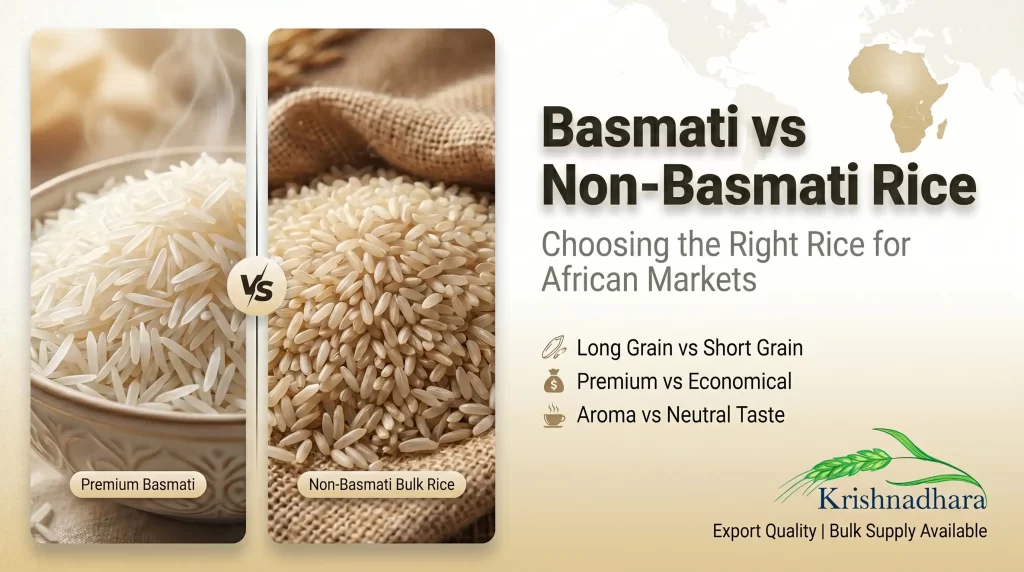
On paper, there are many differences between basmati and non basmati rice. But let’s focus on what actually impacts your business.
First is appearance. Basmati looks premium. Long grains, clean finish. Non basmati looks simpler. This matters more in retail packaging than in bulk sales.
Second is cooking behavior. Basmati stays fluffy and separate. Non basmati can be softer and slightly sticky depending on the variety. This affects how it fits into local dishes.
Third is aroma. Basmati has a clear advantage here. But not every consumer is looking for aroma. In many African households, rice is a staple, not a luxury.
So the real difference is not just in the rice itself. It is in how the market responds to it.
Price Comparison and Business Impact
Let’s talk numbers, because this is where most decisions are made.
Basmati rice is priced higher. That is expected. It is positioned as a premium product, and the cost reflects that. But higher price does not always mean lower demand. It just means a different type of demand.
Non basmati rice is more affordable. It moves faster. It works well in wholesale markets and government supply chains.
Now here’s the part many importers overlook. Margin is not just about cost price. It is about selling price and customer perception.
With basmati, you may sell fewer bags, but at higher margins. With non basmati, you sell more volume, but margins are tighter.
In countries like Nigeria and Ghana, bulk rice suppliers India see consistent demand for non basmati. At the same time, premium supermarkets in cities are slowly increasing their basmati offerings.
So the question is not which is better. The question is which fits your business model.
African Market Demand by Region
Africa is not a single demand zone. Each region behaves differently.
In West Africa, price sensitivity is high. Countries like Nigeria and Ghana import large quantities of non basmati rice. It supports daily consumption, and demand is stable.
In East Africa, things are shifting. Kenya and Tanzania are seeing growing interest in better quality rice. Basmati rice export to Africa is gaining traction here, especially in urban areas.
In Southern Africa, demand is mixed. South Africa, for example, has both premium and mass market segments. This creates space for both rice types.
What this really means is you should not take a one size fits all approach. Your import strategy should match your region.
Cooking Applications and Local Fit
Rice is not just a commodity. It is part of daily life. So how it cooks matters.
Non basmati rice works well for everyday meals. It is filling, easy to cook, and fits traditional dishes. This is why it dominates in bulk consumption.
Basmati rice, on the other hand, is used where presentation and taste matter more. It is common in hospitality settings and special occasions.
Take dishes like jollof rice. Many prefer non basmati because it absorbs flavor well and gives the right texture. But for pilaf or higher-end dishes, basmati performs better.
So your choice should align with how your customers actually use rice.
Supply Chain and Reliability
When you are importing rice, consistency matters more than anything else. One delayed shipment can disrupt your entire distribution.
India remains one of the strongest sources for both basmati and non basmati rice export. The supply chain is established, and exporters understand African market needs.
Working with an experienced supplier like Krishnadhara rice exporter helps reduce risk. Consistent quality, proper packaging, and timely delivery are not optional in this business. They are expected.
Nutritional Perspective
From a nutritional standpoint, both rice types provide similar energy. They are both carbohydrate rich and serve as staple food.
Basmati is often seen as lighter and easier to digest. Some buyers prefer it for this reason. But for most consumers, the difference is not a deciding factor.
What matters more is affordability and availability.
Market Trends and Future Outlook
There is a clear shift happening. As incomes rise in African cities, more consumers are exploring better quality rice. This is where basmati demand is slowly increasing.
At the same time, non basmati rice is not going anywhere. It will continue to dominate because it meets basic needs at scale.
So the future is not about replacing one with the other. It is about coexistence. Check out the Top Rice Exporter countries and Why India leading the Global Market
Business Strategy for Importers
If you are serious about growing your rice import business, you need a balanced approach.
Relying only on non basmati limits your margins. Focusing only on basmati limits your volume.
The smarter approach is to offer both. Serve the mass market with non-basmati. Build your premium segment with basmati.
This way, you are not dependent on one type of customer.
Choosing the Right Supplier
Your supplier can make or break your business.
Look for consistency. Ask for samples. Check how they handle packaging and shipping.
Communication also matters. A good exporter understands your market, not just their product.
Krishnadhara focuses on long-term relationships with African importers by providing both basmati and non basmati rice with stable quality and supply.
Conclusion: What Should You Import
Let’s keep this simple.
If your goal is fast turnover and wide distribution, non basmati rice is the safer option. It sells quickly and meets everyday demand.
If you want higher margins and are targeting a more premium audience, basmati rice is worth adding to your portfolio.
Most successful importers do not choose one. They combine both and adjust based on market response.
That is how you stay competitive. That is how you grow.
FAQ Section
Which rice is best for African markets
It depends on your target segment. Non basmati works best for mass consumption, while basmati suits premium buyers
Is basmati rice in demand in Africa
Yes, especially in urban areas where consumers are willing to pay more for quality
Why do importers prefer non basmati rice
Because it is affordable, easy to sell in bulk, and matches daily consumption needs
Can I import both types of rice
Yes, and it is often the most effective strategy to cover different market segments
Why choose an Indian rice exporter
India offers a wide range of rice varieties, consistent supply, and competitive pricing for African markets